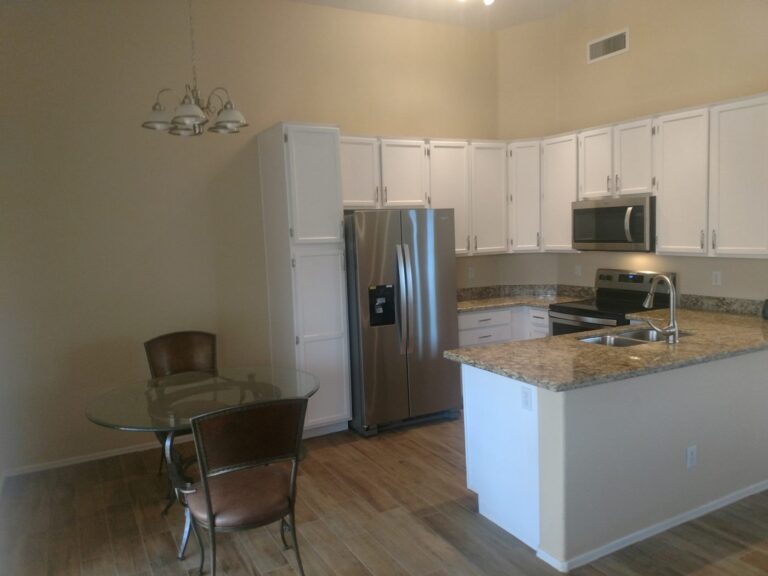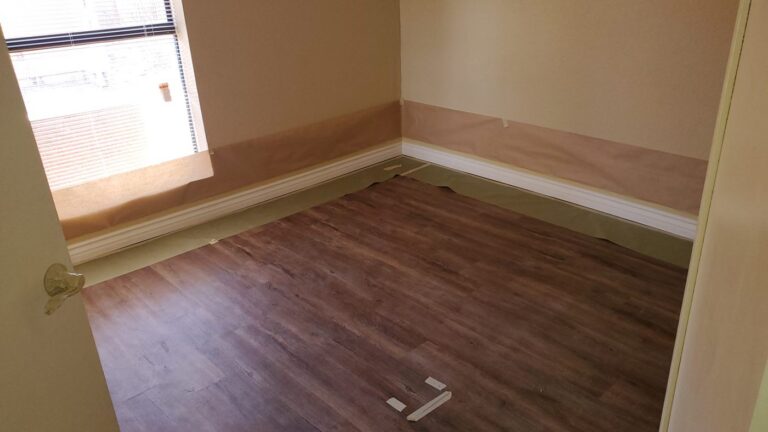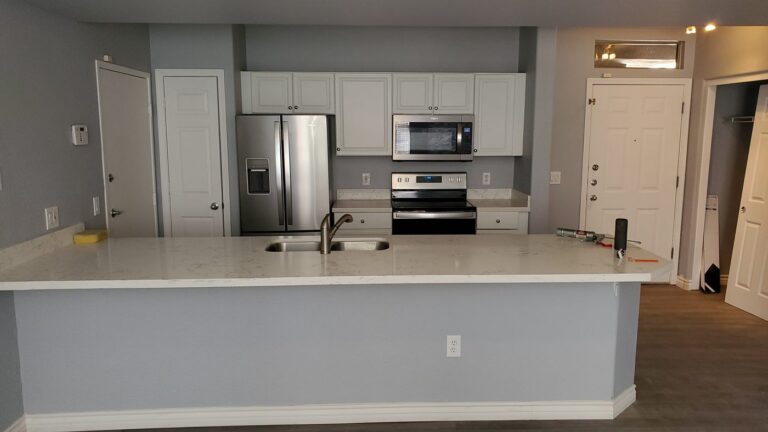
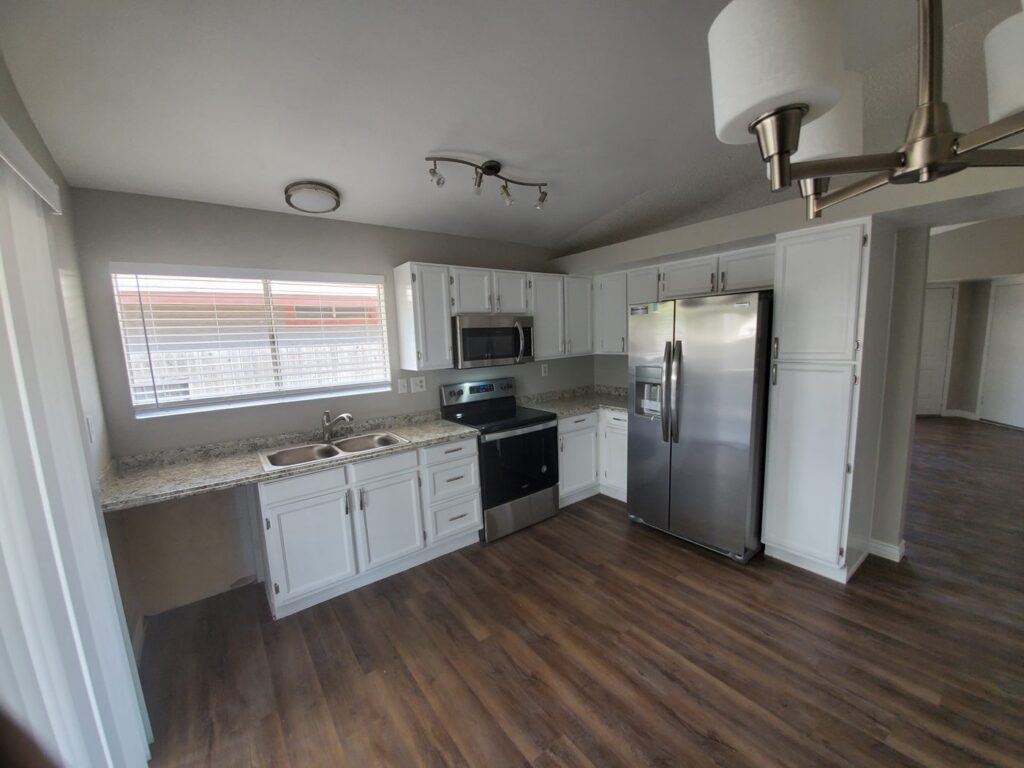
The value add rental upgrades that earn their keep in a Phoenix rental are the ones tenants use every day and that hold up through several tenancies: durable kitchen surfaces, baths that are easy to clean, hard-surface flooring and good lighting. Choose finishes for wear first and style second, and schedule the work at turnover, when the unit is already empty.
Key takeaways
- Do upgrades at turnover when you can. The unit is empty and trades are already scheduled.
- Pick finishes that are durable, repairable and easy to buy again, not this year's trend.
- Sound cabinet boxes can be refaced or painted. Water-damaged or sagging boxes should be replaced.
- Order materials before move-out so vacancy is spent on work, not on waiting.
Which value add rental upgrades fit a turnover, and which need a full renovation?
A turnover upgrade adds a few targeted items to a make-ready that is already happening: new counters, a vanity, flooring in the main living area. A full rental renovation in Phoenix goes further (cabinets, plumbing fixtures, lighting, sometimes layout) and keeps the unit off the market longer.
The choice usually comes down to three things:
- Condition. If cabinets, flooring and fixtures are all worn out at once, doing them together avoids paying for setup and paint twice.
- The owner's plan. A long hold supports different spending than a sale in the near term.
- Vacancy. Every upgrade has to justify the time the unit sits empty.
You can also phase it: set a standard finish package and apply one piece at each turn. A heavy tenant turnover is often the natural point to fold upgrades in.
Why do durable finishes beat fashionable ones?
A rental finish has to survive move-ins, move-outs, strong cleaners and tenants who did not choose it. Ask of every selection:
- Can a damaged piece be repaired or swapped without replacing everything around it?
- Will the same product and color still be available at the next turn?
- Is it neutral enough to suit the next several tenants?
Using the same paint, plank and faucet across a managed portfolio means leftover material gets used and repairs match.
Rental kitchen update: reface, replace or leave it alone?
Cabinets
Look at the boxes. If they are solid, square and dry, refacing or painting with new hinges and pulls changes the look without a tear-out. If the sink base is swollen from an old leak, shelves sag, or face frames are coming apart, replacement is the honest answer. A mix is common: replace the sink base, reface the rest.
Counters
Burned laminate and chipped tile are hard to clean. Whether a harder surface makes sense depends on the rent tier and how long the owner plans to hold. With any material, watch the sink cutout and the backsplash joint, where water gets in.
Fixtures
Choose a faucet in a common finish with parts that can be replaced. While the cabinet is empty, have new shutoff valves and supply lines installed.
Which bath upgrades hold up in a rental?
Tub and shower conversions
Converting an old tub to a shower, or replacing a failing tile surround, is worth pricing when the existing surround leaks, is cracked or cannot be cleaned up. Think about who rents the unit, since many families want at least one tub. Whatever goes in, the waterproofing behind it matters more than the surface.
Vanities
A swollen particleboard vanity will not recover. Replace it, and do the faucet, drain and shutoff valves in the same visit. Add an exhaust fan that actually moves air.
What about flooring and lighting?
Luxury vinyl plank is water-resistant, and tile is long-lasting and common in Phoenix homes. Many owners move living areas, kitchens and baths to hard surfaces and keep carpet only in bedrooms, if at all. Keep a box of the same plank for repairs.
Replace dated fluorescent boxes and mismatched fixtures with LED fixtures in one color temperature. In Phoenix heat, ceiling fans in bedrooms and living areas are worth adding.
How do you sequence the work to limit vacancy?
- Walk the unit as early as your lease and the tenant allow, and build a line-item scope.
- Get owner approval and order long-lead materials (cabinets, counters, special-order fixtures) right away.
- Start with demolition and any plumbing or electrical changes.
- Repair drywall, match texture and paint.
- Set cabinets and counters and install flooring, in the order the products call for.
- Finish with fixtures, hardware, lighting, final clean and completion photos.
What stretches a vacancy is waiting: for materials, for the next trade, for an approval. One schedule under one project lead removes most of it.
Frequently asked questions
Which upgrades raise rent in a Phoenix rental?
No contractor can promise a rent increase. Rent depends on your submarket, comparable units and timing, so compare the planned scope against nearby listings before you approve it.
Is it better to reface or replace rental kitchen cabinets?
Reface or paint when the boxes are solid, square and dry. Replace when there is water damage, sagging shelves or failing face frames.
Should upgrades wait for a vacancy?
Usually, yes. Kitchens, baths and flooring are disruptive, and the unit is already empty at turnover. Small items such as lighting can sometimes be done while occupied.
How DHR handles an investor remodel
DHR Contracting is a licensed, bonded and insured general contractor (Arizona ROC 355423) that does tenant turnovers and kitchen, bath and whole-home remodeling, so one project lead can run a light upgrade or a full investor remodel. On one DHR whole-home remodel, the appraised value rose by more than the renovation cost. That is one project, not a forecast for yours.