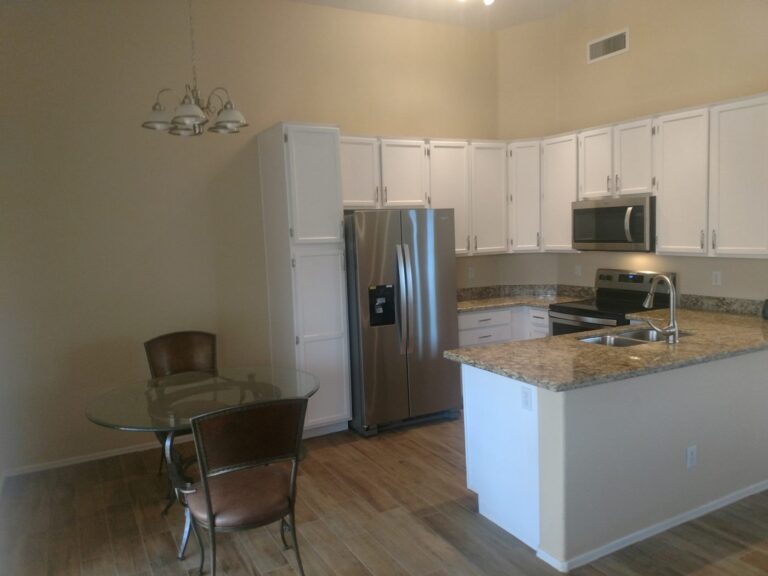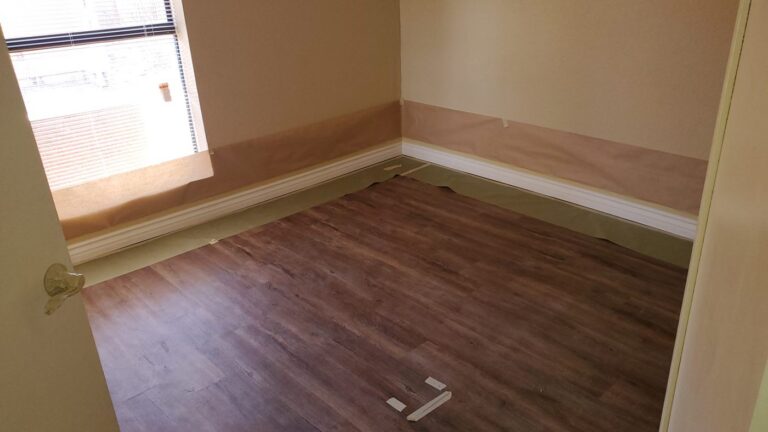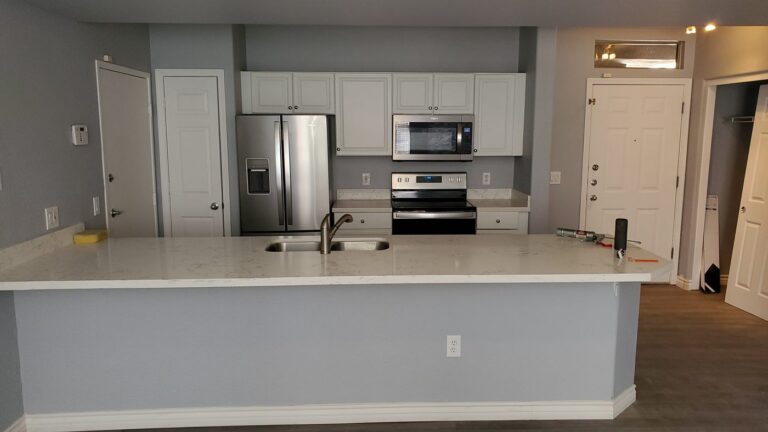
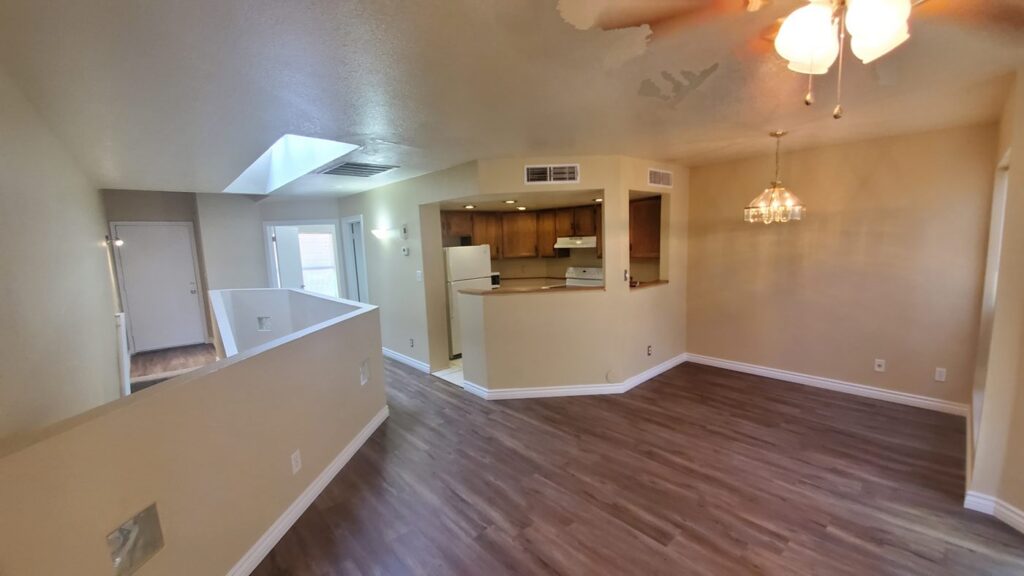
In the LVP vs carpet rental decision, luxury vinyl plank tends to cost less to turn over in living areas, kitchens, halls and baths, because it is water-resistant, cleans up between tenants and can be repaired a plank at a time. Carpet still earns its place in bedrooms, upstairs rooms and on stairs. For most Arizona rentals the answer is a mix of the two, kept the same from unit to unit.
Key takeaways
- LVP keeps spills and pet accidents on the surface. Carpet and pad absorb them.
- A damaged plank can be swapped if you have matching stock.
- Subfloor prep and transitions decide whether plank looks right and stays flat.
- One standard product across a portfolio simplifies repairs, ordering and bids.
LVP vs carpet in a rental: how does each one behave?
Wear
Carpet shows traffic lanes in halls and doorways, and matting does not clean out. Plank has a wear layer that stands up to foot traffic, but it scratches and gouges when furniture or appliances are dragged across it.
Pets and spills
Carpet and pad soak up whatever lands on them, and pet odor can come back after cleaning. LVP is water-resistant, so spills and accidents wipe up. That is not the same as flood-proof. Water from a supply line leak can get under a floating floor and stay there until the planks are lifted.
Cleaning between tenants
Carpet needs professional cleaning at each turn, and every move-out raises the same question: clean it again or replace it? Plank is swept and mopped as part of the final clean.
Repairing a damaged area
Carpet can be patched from a matching remnant, but seams show and older carpet has faded. Plank is repaired by the piece. Glue-down planks are swapped one at a time. On a click-together floating floor, the installer works back from the nearest wall or cuts out the damaged plank. Either way, you need planks from the same product.
Where does carpet still make sense?
- Bedrooms. Carpet is soft and quiet, and bedrooms see less traffic and fewer spills.
- Upstairs rooms and upper-floor units. Hard floors carry footfall noise to the rooms below. In condos and townhomes, check the CC&Rs for flooring rules.
- Stairs. Carpet gives footing and deadens sound. Plank on stairs needs nosing pieces and more labor.
- Carpet in good condition. If it cleans up well, keep it for another tenancy.
Plank is the stronger choice in kitchens, baths, entries, halls and living rooms, and in any unit that allows pets.
What subfloor prep does luxury vinyl plank need in a rental property?
Plank is thin, and it shows whatever is under it. Many Phoenix-area homes sit on a concrete slab. Once the carpet is up, the installer should:
- Pull the tack strip and patch the nail pits it leaves in the concrete.
- Scrape off pad residue and old adhesive.
- Grind high spots and fill low ones.
- Check for moisture the way the flooring manufacturer specifies.
Transitions are where a floor looks finished or does not. Where plank meets tile, carpet or an exterior door, a height difference needs the right reducer. Door jambs are undercut so the plank slides beneath them, and baseboard or quarter round covers the expansion gap a floating floor needs.
Follow the manufacturer's guidance on direct sun and on keeping the home conditioned during installation. A vacant unit with the power off in a Phoenix summer is the wrong place to lay a floating floor, so settle utilities before the repair and flooring crews are scheduled.
Why standardize durable flooring for rentals across a portfolio?
Choosing one plank and one carpet for every unit you manage pays off at each turn.
- Repairs match. Spare cartons from one unit can fix a damaged area in another.
- Ordering is simple. You know the product, the supplier and the lead time.
- Bids are comparable. With the material fixed, the bid moves with square footage and subfloor condition.
- Decisions are already made. Flooring replacement at turnover becomes a known line item, not a new discussion with each owner.
Pick a product line that is likely to stay available, keep spare cartons, and record the product and color in each unit file. It is one of the simplest standards a property manager can set.
How do you choose rental flooring in Arizona, unit by unit?
Make the call during the move-out walk. If the carpet cleans up, keep it. If it has to be replaced anyway, price plank for the living areas and compare the two over several turns, not one. The total depends on material and installation cost, how many tenancies the floor should serve, cleaning at each turn, and whether pets are allowed.
Frequently asked questions
Is LVP waterproof?
LVP is water-resistant, so surface spills wipe up. Water that gets under the floor from a plumbing leak still has to be dried out, and the subfloor and baseboards can be affected.
Can you replace one damaged plank?
Yes, if you have matching planks from the same product. The method depends on whether the floor is glued down or floating.
Should a rental have carpet in the bedrooms?
It is a reasonable choice for comfort and sound, especially upstairs. The tradeoff is cleaning or replacing it at turnover.
How DHR handles flooring replacement at turnover
Carpet or plank flooring is part of DHR Contracting's standard turnover package, sequenced after repairs and paint by one project lead. Our sister company, The Flooring Outlet, supplies carpet, tile, luxury vinyl and wood. We walk the unit with photos, write a line-item scope and close out with before-and-after photos. See our tenant turnover services for Phoenix and the East Valley.