Water heater maintenance in Arizona rental properties comes down to managing hard water: flush the sediment, check the anode rod, look over the valves and connections, and replace the tank before it leaks. Phoenix water is hard, so scale and sediment build up faster than they do in soft-water areas, and the turnover between tenants is your best chance to look.
Key takeaways
- Hard water leaves scale and sediment that cut hot water capacity and stress the tank bottom.
- The anode rod corrodes so the steel tank does not. Once it is used up, the tank is next.
- A drain pan, expansion tank and working shutoff valves limit damage when something fails.
- Parts can be repaired. A leaking tank cannot.
What does Phoenix hard water do inside a water heater?
Hard water carries dissolved minerals, mostly calcium and magnesium. Heating drives them out of solution. Some harden into scale on the tank bottom and on electric heating elements. The rest settles as loose sediment.
In a gas heater, that layer sits between the burner and the water, so the heater runs longer and the tank bottom takes more heat than it was built for. The popping or rumbling a tenant hears is water trapped under sediment. In an electric heater, scale coats the lower element until it burns out.
Sediment also takes up room meant for hot water, so a hard water water heater problem usually reaches you as a complaint: not enough hot water, noise or discolored water.
What are the signs of trouble at the top and bottom of the tank?
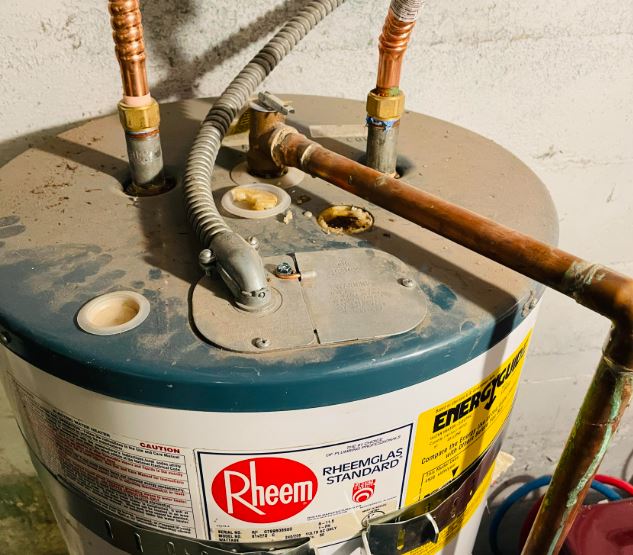
At the top
- Crust or rust on the hot and cold connections.
- A relief valve that drips.
- On gas units, a loose vent or soot near the draft hood.
At the bottom
- Water or rust stains in the drain pan.
- Rust at the base of the tank.
- A drain valve that weeps or will not open.
Top signs usually point to parts that can be repaired. Water at the bottom with no valve or fitting to explain it often means the tank itself.
What does the anode rod do, and when is anode rod replacement worth it?
A tank water heater is a glass-lined steel tank. No lining is perfect, so manufacturers hang an anode rod inside, commonly magnesium or aluminum. The rod is more reactive than steel, so corrosion attacks the rod and spares the tank.
The rod gets used up, and how fast depends on water chemistry and hot water use. Once it is gone, exposed steel starts to rust and nobody knows until the tank leaks. Replacing the rod while the tank is still sound is one of the few maintenance steps that protects the tank itself.
A powered anode rod uses a small electrical current to do the same job, so it is not consumed the way a sacrificial rod is. Powered anodes are also used where a standard rod reacts with the water and causes a sulfur smell.
Which protective accessories matter on a rental property water heater?
- Drain pan. It catches a slow leak and, when piped to a drain, carries the water away. It matters most in interior closets, upstairs and over finished space.
- Expansion tank. Water expands as it heats. On a closed plumbing system, an expansion tank absorbs that pressure so the heater and relief valve do not have to.
- Shutoff valves. Old valves seize. If nobody can shut off the water at the heater, a small leak becomes a large one.
What an installation needs depends on its location and local code, so have a licensed contractor confirm it.
Repair or replace: when is water heater replacement in Phoenix the right call?
Repair when the problem is a part: a heating element, thermostat, gas control, relief valve, drain valve, supply line or anode rod.
Replace when the problem is the tank: a leak from the tank body, heavy rust at the base, sediment that will not flush out, or repairs that keep repeating. Weigh the age on the data plate and where the heater sits. One in a garage leaks onto concrete. One in a second-floor closet leaks into the unit below.
Why check the water heater at turnover?
A vacant unit is the easiest time. Add these steps to your make-ready walk:
- Read the data plate and log the age in the unit file.
- Look over the top and bottom for the signs above.
- Test the shutoff valve and check the pan and relief line.
How often to flush depends on water hardness, use and the manufacturer's instructions. On a tank that has never been flushed, the drain valve may not reseal, so leave it to a plumber. Managers with many doors who log tank age at every turn can plan replacements.
Frequently asked questions
How often should a water heater be flushed in Phoenix?
It depends on water hardness, hot water use and the manufacturer's instructions. Check the tank at every turnover.
Can a leaking water heater be repaired?
At a valve, fitting or supply line, usually yes. If the tank itself is leaking, the heater needs to be replaced.
Is a powered anode rod worth it in a rental?
It makes the most sense on a sound tank you plan to keep, or where a standard rod is causing odor.
How DHR helps with rental water heaters
DHR Contracting offers a free 25-point water heater inspection, repairs and same-day replacement, with the old tank hauled away and a 2-year labor warranty. We install tank, low-profile and tankless units across Maricopa and Pinal Counties. Ask for one on your next turn, or see our water heater services.