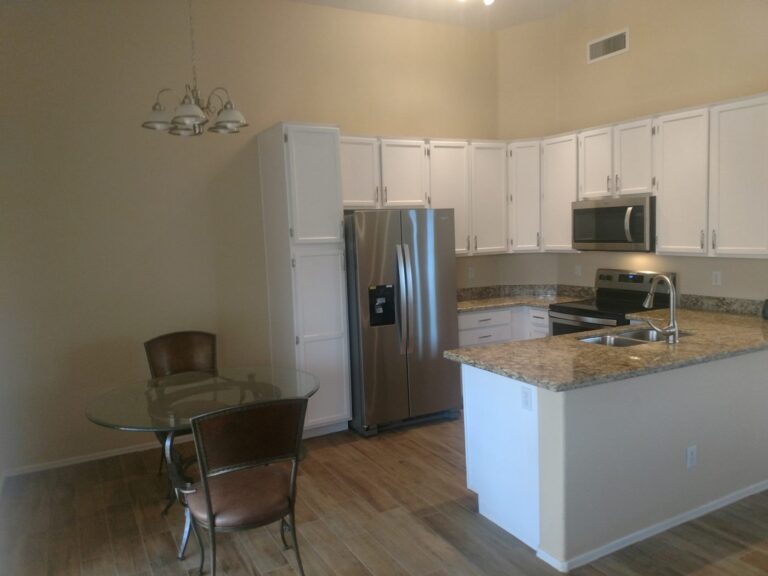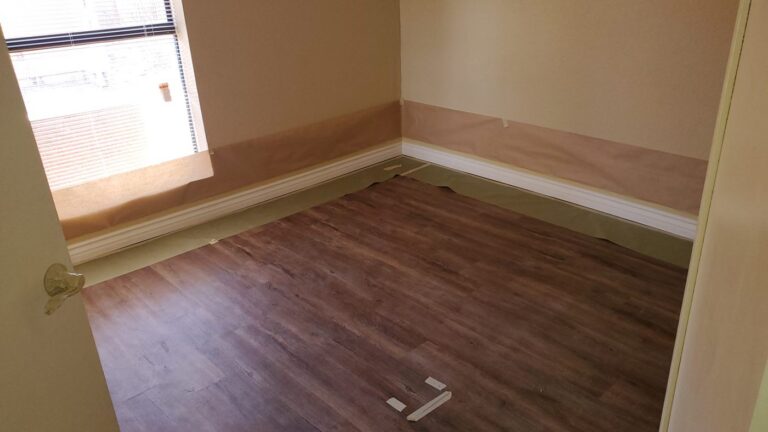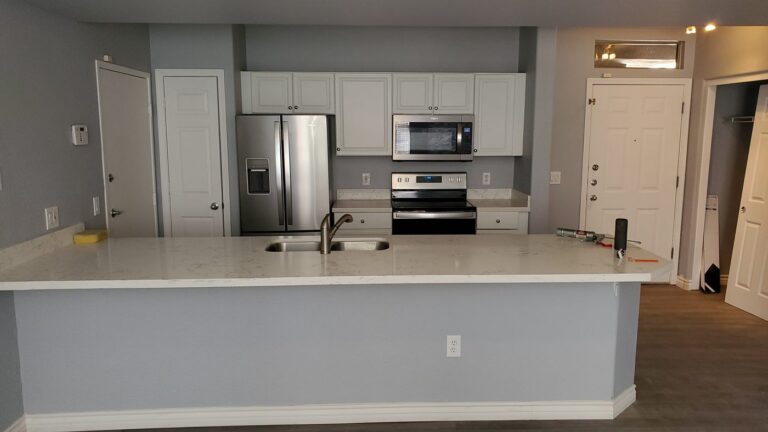
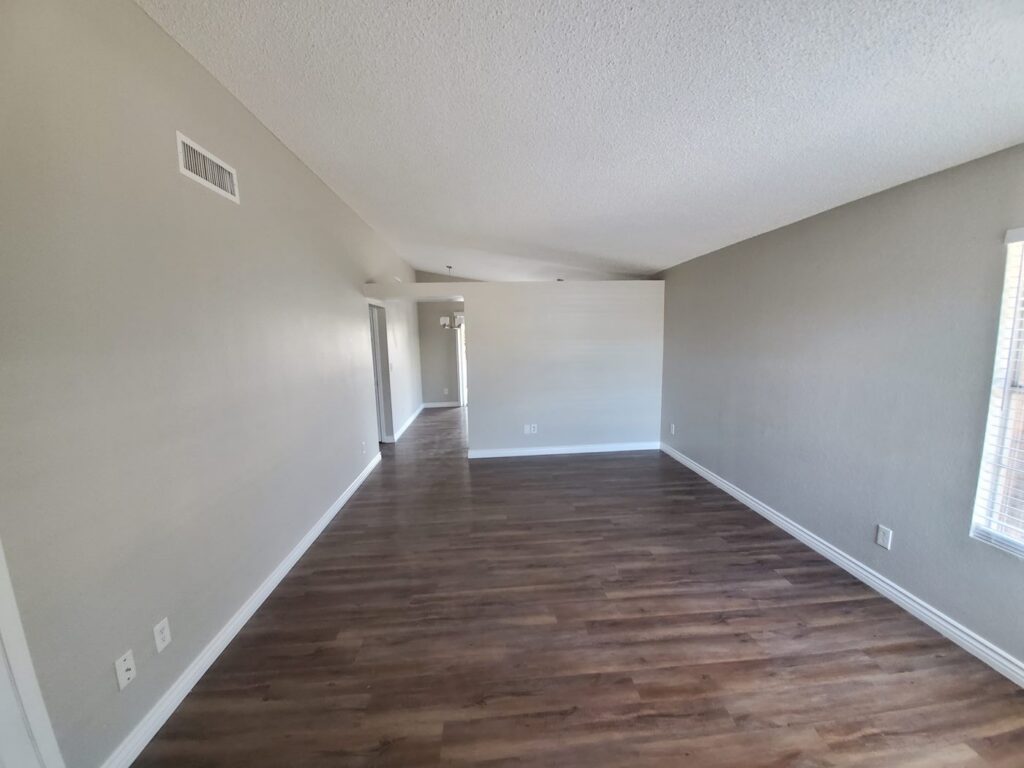
At rental turnover, touch-up works when the paint is fairly fresh, the color and sheen are known, and the marks are small and scattered. A full rental repaint at turnover is the better call when the walls have faded, the sheen is glossy enough to flash, or patches and stains cover enough of the room that touch-ups would show.
Key takeaways
- Touch-up blends best on flat or low-sheen paint that has not aged much.
- If touch-ups show, paint the whole wall corner to corner, not a bigger spot.
- One standard color and sheen across the portfolio is what makes touch-up possible.
- Prep decides the result: fill, patch, match texture and prime before paint.
- Paint before flooring. Baseboard touch-up comes after.
When does touch up paint work in a rental?
Touch-up is the right scope when all of these are true:
- The last paint job is recent enough that the walls have not faded or yellowed.
- You know the exact product, color and sheen, and ideally have leftover paint from the same job.
- The finish is flat or close to it.
- The damage is light: a few nail holes, scuffs behind furniture, a mark by the door.
Test it before you commit. Touch up a few spots on the wall with the most window light, let them dry, and look along the wall at an angle. If you can pick out the spots, so can a prospect on a tour.
Rental repaint at turnover: when does touch-up show?
Touch-up fails for predictable reasons:
- Faded paint. Phoenix sun through south and west windows changes wall color over time. Fresh paint from the same can will not match it.
- Higher sheens. Eggshell, satin and semi-gloss flash, which means the touched-up spot reflects light differently from the wall around it.
- Different application. A brushed spot on a rolled wall has a different surface.
- Many or large patches. At some point you are painting most of the wall anyway.
- Smoke, grease or heavy scrubbing. The whole surface has changed, not just the spots.
- Unknown color. A close match is not a match.
Step up one level at a time:
| What you see | Usual scope |
|---|---|
| A few marks, recent paint, known color | Touch-up |
| Patches or wear on certain walls | Paint those walls corner to corner |
| Wear throughout one or two rooms | Repaint those rooms |
| Faded, stained or mismatched throughout | Full repaint |
Why standardize one color and sheen for interior painting across rental properties?
Most touch-up problems trace back to not knowing what is on the wall. A portfolio standard fixes that.
- Every unit uses the same product, so touch-up is an option at every turn.
- Leftover paint from one unit gets used in the next.
- Nobody loses a morning getting a color matched.
Pick a neutral wall color, one wall sheen, and one trim and door paint. Record the brand, product line, color name and sheen in each closeout report. If you work with one contractor across your managed properties, ask them to keep the standard on file.
What wall prep does paint between tenants need?
Paint hides color, not surface problems.
- Nail holes. Fill, sand flush and spot prime. Unprimed filler shows through as a dull spot.
- Drywall patches. Doorknob holes, TV mounts and pulled anchors need real patches that are taped, mudded and sanded.
- Texture match. Many Phoenix-area interiors have a sprayed texture such as orange peel or knockdown. A smooth patch on a textured wall shows through any paint, so match the texture before priming.
- Stains. For a water stain, find and fix the source first (often a plumbing repair), then use a stain-blocking primer.
- Cleaning. Kitchen grease and bath residue keep paint from bonding. Wash those walls first.
What about doors and trim?
Doors, casings and baseboards take the most contact from hands, shoes and vacuums. They usually get a higher sheen that wipes clean, and that sheen is why touch-ups on them stand out. Paint the whole door face or the whole run of casing instead of spotting it.
A hollow-core door with a hole in it is often faster to replace than to patch. Caulk the gap along the top of the baseboard before painting so the line is clean.
How does paint fit the turnover sequence?
- Trash-out and scope walk with photos.
- Repairs: plumbing, electrical, drywall.
- Texture and prime.
- Ceilings and walls, then doors and trim.
- Flooring.
- Baseboard touch-up, fixtures, hardware, final clean and completion photos.
Paint goes before flooring so drips and sanding dust land on the old floor, not the new one. Flooring installers will scuff a baseboard or two, so plan a short touch-up pass afterward.
Frequently asked questions
Can you touch up paint without it showing?
Sometimes. It works best on recent, flat paint when you have the same product and color. On faded or higher-sheen walls, paint the full wall corner to corner.
Should every unit get a full repaint between tenants?
No. It depends on the age and condition of the paint and how the unit was lived in. Some turns need only touch-up or a few full walls.
What sheen is best for rental walls?
It is a trade-off. Flatter finishes hide touch-ups and wall flaws, while higher sheens clean more easily but flash. Pick one and use it across the portfolio.
Apartment painting in Phoenix with DHR
DHR Contracting handles paint as part of light, standard and heavy tenant turnovers, with drywall patching, texture match, prime and paint in one line-item scope. One project lead runs the sequence, and the closeout includes before-and-after photos. Our sister company, The Flooring Outlet, covers the flooring that follows.