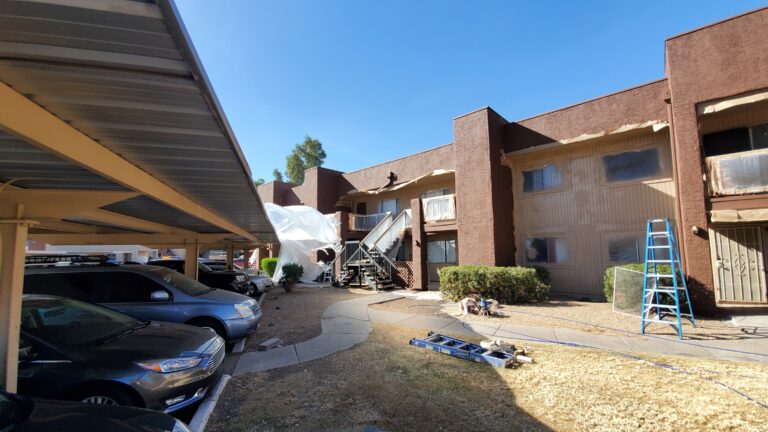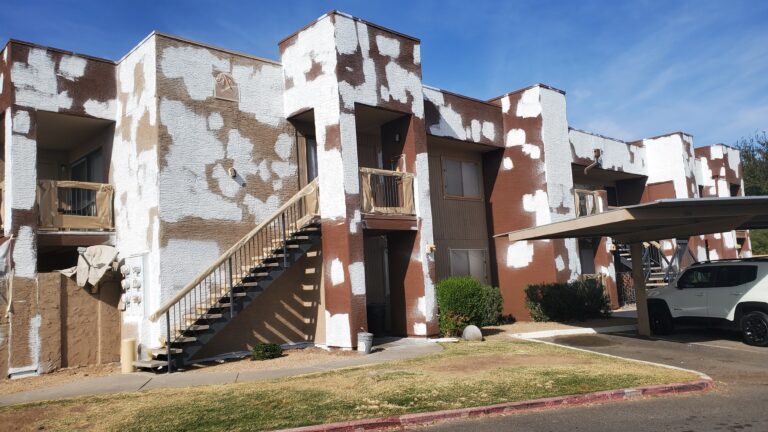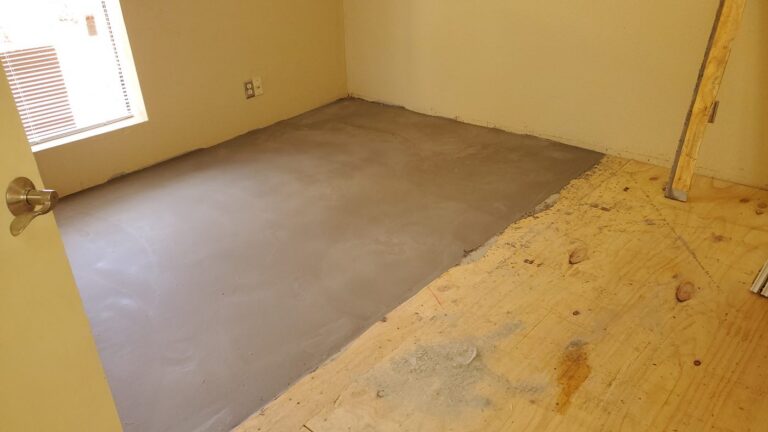
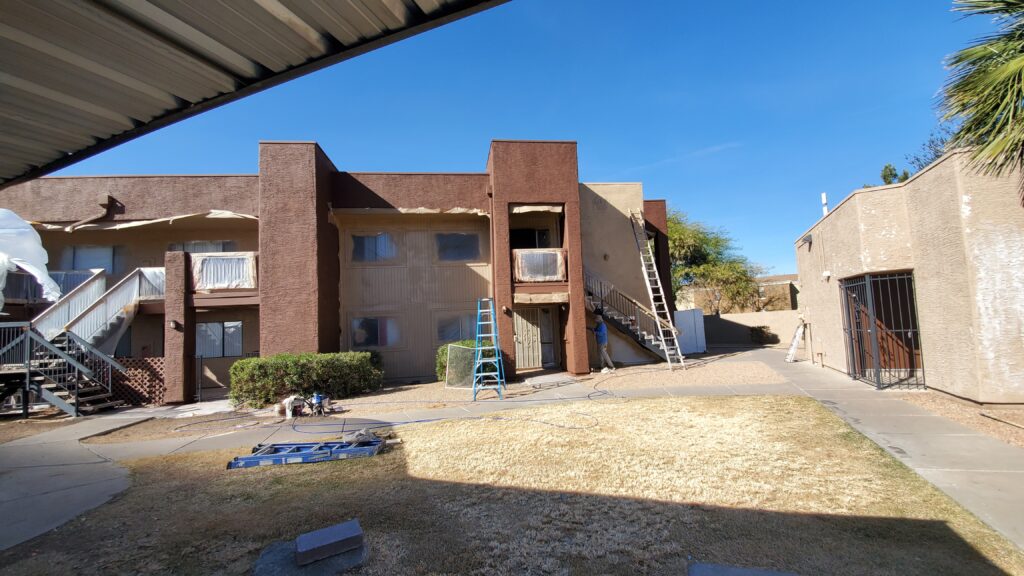
Monsoon prep for an HOA means finding and fixing the weak points in your exteriors before the first big storm finds them for you. Walk the community before summer, schedule repairs to cracked stucco, failing paint, loose roof edges and flashing, gates, shade structures and stairs, and photograph the condition of everything. That record also makes storm repairs and any insurance claim much easier afterward.
Key takeaways
- Wind, dust and heavy rain exploit damage that already exists. Small cracks and loose parts are where storm damage starts.
- Walk the property before summer with a list organized by building element.
- Take dated photos of every elevation and amenity before the season.
- After a storm, photograph the damage before cleanup and protect openings from more water.
What does a Phoenix monsoon do to community exteriors?
Phoenix summers bring a monsoon season with strong wind, blowing dust and short bursts of heavy rain, all on top of months of heat and UV that have already dried out paint and sealants. Most Phoenix monsoon property damage starts at a spot that was weak before the storm.
- Stucco: wind-driven rain enters through cracks, holes and gaps around windows and penetrations. Water behind stucco shows up later as stains, bubbling and loose patches.
- Paint: chalky or peeling paint no longer sheds water, so the wall underneath takes it in. Dust followed by rain leaves streaks on every elevation.
- Roof edges and flashing: wind lifts anything loose at the edge of a roof, including fascia, edge metal, flashing and parapet caps. Once an edge opens, rain gets under it.
- Gates: gusts slam gates that do not latch, which bends hinges and loosens posts.
- Shade structures: ramada roofs and shade fabric catch wind like a sail. Loose connections and rusted post bases take the load.
- Stairs: rain ponds on landings and treads, feeds rust on steel and works into cracks in concrete.
Which exterior repairs should you schedule before monsoon season?
Use this pre-season walk list, and start early enough that the bid, the board vote and the work can all happen before the storms.
- Stucco: mark cracks, holes, hollow or loose areas, and gaps at windows, doors and utility penetrations for stucco patching and texture match.
- Paint and sealants: note peeling, chalking and failed caulk, especially on the elevations that take the most sun.
- Roof edges and flashing: from the ground, look for loose fascia, lifted edge metal, displaced flashing, and blocked scuppers, gutters and downspouts. Have your roofing vendor check the roof surface itself.
- Gates: test every latch and closer. Check hinges, welds and posts for rust and movement.
- Shade structures and ramadas: check post bases, anchor bolts, connections, roof panels and fabric attachment.
- Exterior stairs and railings: look for rust, loose treads, wobbling railings and landings that hold water.
- Perimeter walls: note leaning sections, cracked block and loose caps.
- Loose items: secure or store signs, furniture and anything else the wind can carry.
Bundle these exterior repairs before monsoon season into one scope where you can, so stucco, paint, general repairs and stair work run on one schedule.
What should you document before the storms?
Documentation is the least expensive part of monsoon prep for an HOA. Build a simple pre-season file:
- Dated photos of every building elevation, roof edge visible from the ground, wall, gate and amenity.
- Notes on existing damage, with locations, so old problems are not confused with new ones.
- A record of repairs completed this season, with invoices and before-and-after photos.
How should you handle HOA storm repairs and insurance documentation?
After a significant storm, walk the property again as soon as it is safe.
- Deal with hazards first. Keep people away from downed lines, damaged stairs and leaning walls, and call the utility for anything electrical.
- Photograph before cleanup. Take wide shots that show the location and close shots that show the damage. Record the date of the storm.
- Stop further damage. Cover openings and secure loose materials, and keep the receipts for any temporary work.
- Call your association's insurance agent. Coverage and deductibles depend on your policy, and your governing documents determine what is the association's to repair.
- Get a written scope. A line-item bid for community storm damage repair, with photos, gives the board and the adjuster the same document to work from.
Then compare the new photos with your pre-season file.
Frequently asked questions
When should an HOA start monsoon prep?
Before summer, and early enough for the site walk, the bid, board approval and the repairs to finish before the storms arrive. How much lead time you need depends on the scope and your board's meeting schedule.
Does HOA insurance cover monsoon damage?
It depends on your association's policy and on what was damaged. Ask your insurance agent, and check your governing documents for which repairs belong to the association and which belong to owners.
Should we patch stucco now or wait for the full repaint?
Patch and seal the cracks that let water in now, and plan the full repaint as its own project. A good patch matches the existing texture, so it blends in when the repaint happens.
How DHR Contracting helps before and after the storms
DHR Contracting is a licensed, bonded and insured general contractor in Chandler (Arizona ROC 355423) serving HOAs across Maricopa and Pinal Counties. We walk the site with photos, write a line-item scope and time the bid for your next board meeting, then close out with before-and-after photos. See how we handle HOA repairs, including insurance and restoration work, and expect a same-day callback on your request.