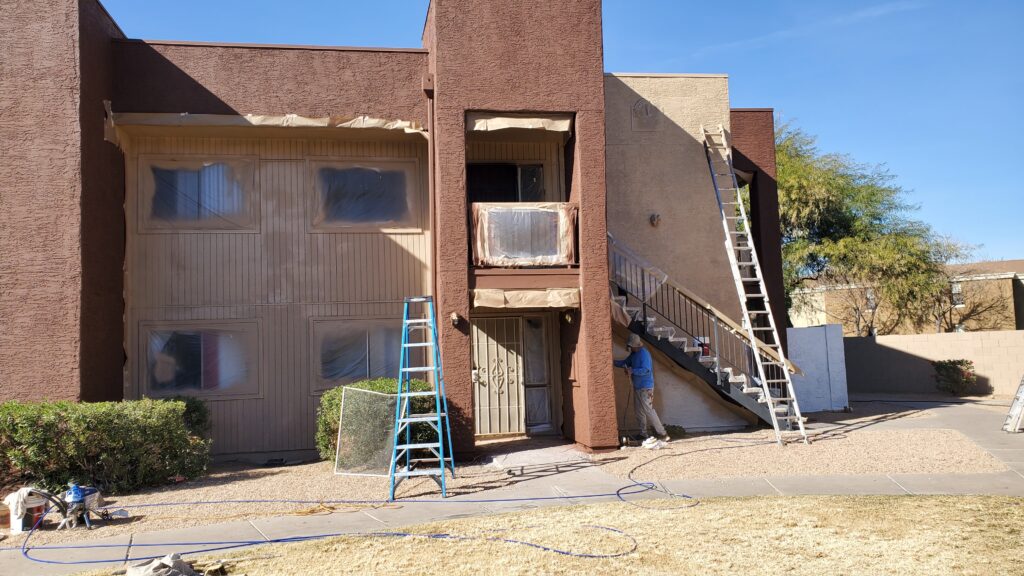
To vet an HOA contractor in Arizona, start with an Arizona ROC license lookup: confirm the license is active and that its classification fits the work. Then ask for a current certificate of insurance, check references and photos from similar community work, and read the payment terms before your board votes. Licensed, bonded and insured are three separate things, and each one can be verified.
Key takeaways
- Licensed, bonded and insured are three different protections. Verify each one on its own.
- An active license only helps if its classification matches the work in the bid.
- Ask for the certificate of insurance to come from the contractor's insurance agent.
- Payment terms tied to completed work keep the board in control of the project.
What do licensed, bonded and insured mean?
Bids often say "licensed, bonded and insured" as if it were one credential. It is three, and a bonded and insured contractor is not automatically a licensed one.
- Licensed means the company holds a contractor's license issued by the Arizona Registrar of Contractors (ROC) in a specific classification. The classification defines the type of work the license covers.
- Bonded means a surety company has issued a bond tied to the contractor. A bond is not insurance on your project. It is a financial backstop if the contractor fails to meet its obligations.
- Insured means the contractor carries its own insurance policies. General liability addresses property damage and injuries arising from the work. Workers' compensation addresses the contractor's own employees if they are hurt on the job.
What a bond or policy will pay for in a given situation is a question for your association's attorney and insurance agent.
How do you do an Arizona ROC license lookup?
Contractors in Arizona are licensed by the ROC, and anyone can look up a license on the ROC website. A licensed contractor serving an Arizona HOA should print the license number on the bid, so start there.
- Take the license number and company name from the bid.
- Go to the Arizona Registrar of Contractors website and open the contractor search.
- Search by license number, then confirm the business name matches the name on the bid and the contract.
- Check that the license status is active.
- Note the classification and review any complaint history the record shows.
Save a dated copy of the record in your vendor file.
Does the license classification match the work?
An active license in the wrong classification does not help you. Classifications separate residential from commercial work, and general building from specialty trades.
Community work tends to cross those lines. One project may touch condo buildings, a clubhouse, perimeter walls and exterior stairs. A dual classification covers both sides. DHR Contracting, for example, holds a KB-1 Dual Building Contractor license (ROC 355423), which covers residential and commercial building work. You can read more about our license and background.
Specialty trades carry their own licenses. HVAC is a good example: our sister company Absolute Air AZ holds a separate license (ROC 344864) for that work. When a bid includes a specialty trade, ask whose license it falls under.
What should you ask for on HOA contractor insurance?
Ask for a certificate of insurance, and ask that it come directly from the contractor's insurance agent instead of a copy from the contractor's files. Then check these points:
- The named insured matches the company on the license and the bid.
- General liability and workers' compensation both appear.
- The policy dates cover the period of your project.
- Whether the association should be listed as certificate holder or additional insured. Your association's insurance agent can tell you what to request.
- How subcontractors are covered, if the contractor uses them.
If you want ours, request it with your bid.
How else can you vet an HOA vendor before the board votes?
References and photos of similar community work
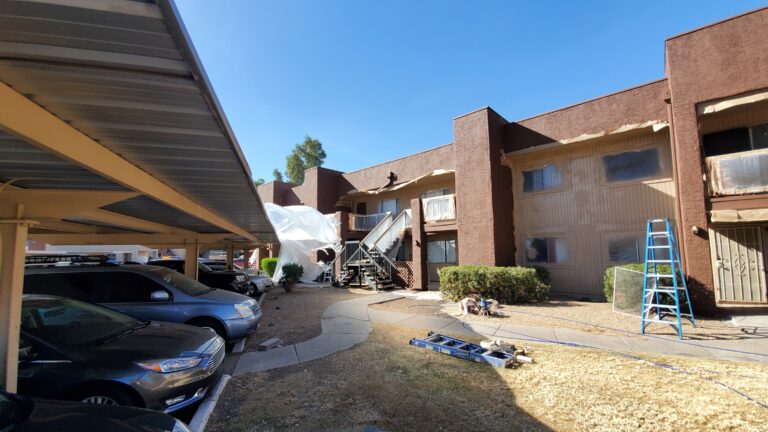
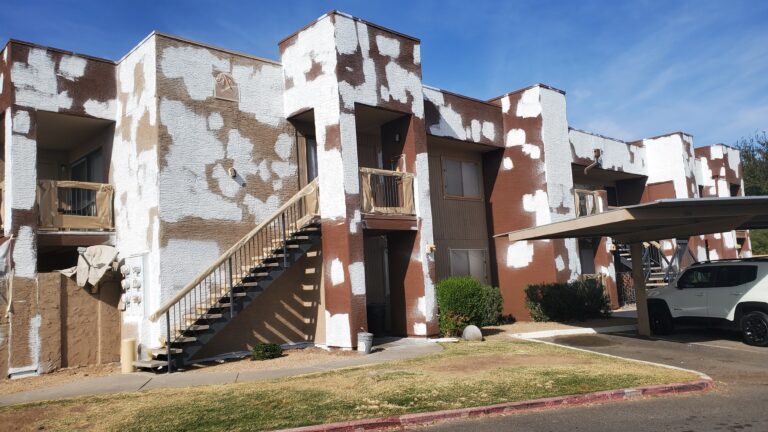
Ask for references from other community managers, not only homeowners. Ask for before-and-after photos of work like yours, whether that is stucco repair and exterior paint, stairs, gates or a clubhouse. Then ask each reference how the contractor handled resident notices, access and cleanup.
Payment terms
Read how much is due up front, what triggers each progress payment and when the final payment is due. Terms tied to completed, visible milestones keep the board in control. The final payment should follow a walkthrough of the finished work. Ask your association's attorney what paperwork to collect with each payment.
Frequently asked questions
Is a bonded and insured contractor the same as a licensed contractor?
No. A license comes from the Arizona Registrar of Contractors, a bond comes from a surety company and insurance comes from an insurance carrier.
Can anyone look up an Arizona contractor's license?
Yes. The Arizona Registrar of Contractors website has a public contractor search. Search by license number or company name and check the status and classification.
How often should an HOA re-check a vendor's license and insurance?
Check at the start of each project and at every contract renewal, and ask for a new certificate when the policy dates on the old one pass. Licenses and policies can lapse between jobs.
How DHR Contracting makes vetting simple
DHR Contracting is a licensed, bonded and insured general contractor based in Chandler, woman-owned and veteran-managed, serving Maricopa and Pinal Counties. Look us up on the ROC website under license 355423, then ask for a site walk and a line-item bid for your board. Under our Diamond Clad Guarantee, we do not ask for final payment until the job is complete and you are satisfied.